


One of Perugia's most emblematic landmarks has regained its former splendour thanks to the expertise of Corbo Group. Teatro del Pavone, one of Italy's most distinguished historic theatres, has undergone extensive restoration and structural strengthening, with careful respect for the architectural and artistic identity that has defined the building since the 18th century. This complex project, undertaken in the heart of the historic city centre, has returned to Perugia a revitalised cultural landmark that is once again a place for performance, a repository of collective memory and a celebration of architectural beauty.
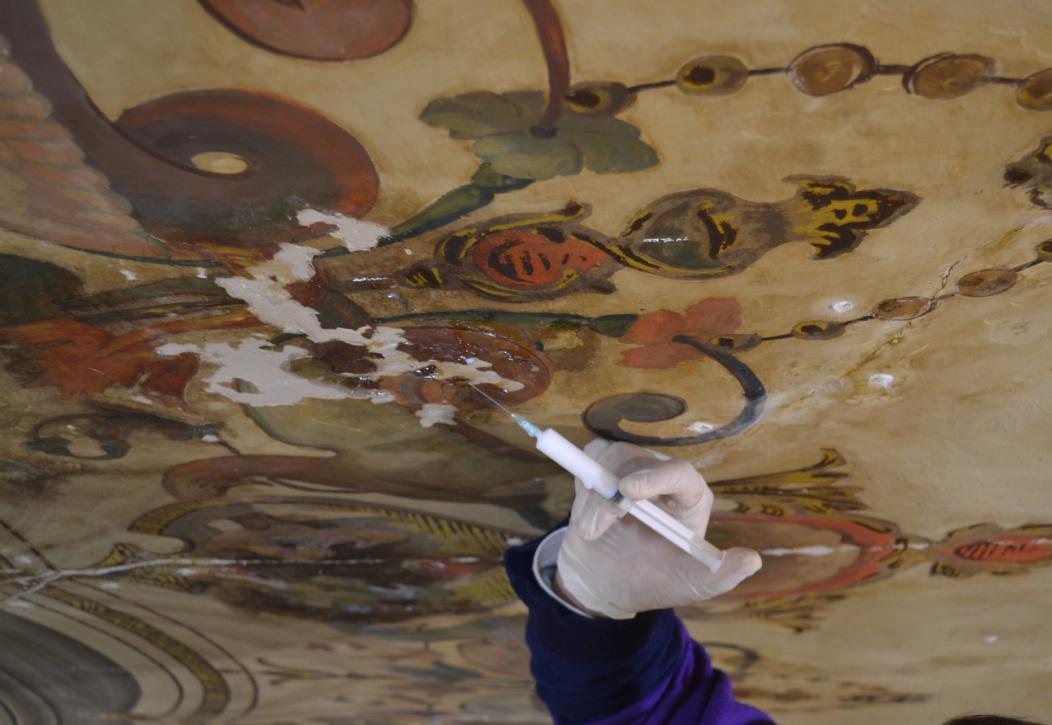
The theatre's 18th-century structure presented significant structural and conservation challenges, primarily caused by water infiltration that had damaged the vaulted ceiling, proscenium arch and historic painted decorations. The restoration addressed these issues through a multidisciplinary approach, employing minimally invasive strengthening techniques and materials compatible with the building's original construction methods. Acrylic resins, lightweight mortars, glass fibres and localised anchoring systems were used to stabilise the affected surfaces without altering their original appearance. Throughout the project, Corbo Group worked in close coordination with the relevant heritage conservation authorities, supported by specialists in architectural and artistic restoration.
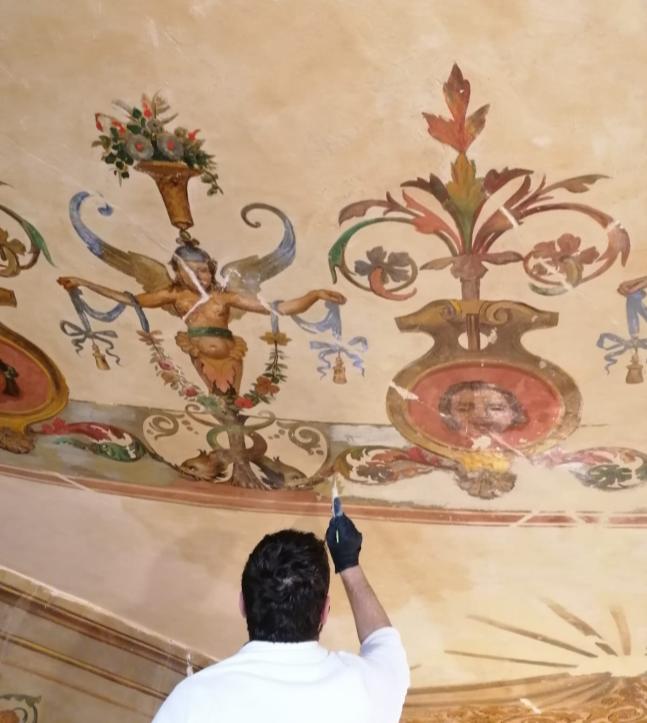
One of the theatre's most remarkable features is its richly decorated ceiling, with elaborate drapery, grotesque motifs and winged figures extending across the large horseshoe-shaped vault. The painted surface, executed in tempera on a traditional reed-and-plaster support, had suffered extensive deterioration. Detachment, discolouration, cracking and traces of previous incompatible restoration work had compromised the integrity and legibility of the decorative scheme. The restoration involved consolidating the underlying support and carefully reintegrating areas of paint loss using a range of specialised techniques, including rigatino (fine-line retouching), stippling and translucent glazing. These interventions restored visual coherence to the decorative scheme while preserving its artistic significance. A final protective glaze was applied to support the long-term preservation and legibility of the restored surfaces.
Preserving Beauty, Enriching Culture
Teatro del Pavone demonstrates how architectural restoration can combine heritage conservation with renewed cultural value. Alongside the structural and artistic restoration, Corbo Group carried out functional improvements to the building, enabling the theatre to welcome audiences once again while fully respecting its historic character. The building services were upgraded and carefully integrated into the existing structure, improving comfort, safety and environmental performance without compromising the architectural fabric. This approach ensures that the theatre's heritage can continue to be experienced and appreciated by future generations.
A Complex Restoration Requiring Specialist Expertise
Every stage of the project, from the initial structural assessment to the meticulous restoration of the painted decorations, required technical precision, artistic sensitivity and an integrated approach to heritage conservation. Restoring Teatro del Pavone represented a significant multidisciplinary challenge, involving highly specialised professionals, ongoing coordination with the relevant heritage authorities and the application of advanced strengthening techniques compatible with the original 18th-century materials.
Modern Design.
Through a unique combination of engineering, construction and design
Luxurious Facilities.
Through a unique combination of engineering, construction and design
Corbo Group demonstrated its ability to work within particularly sensitive historic environments, where technical complexity must be carefully balanced with the preservation of a building's architectural identity and cultural significance. Through the considered use of innovative technologies and minimally invasive methods, the team was able to carry out effective interventions while safeguarding the authenticity of the historic structure. The project has restored damaged decorative elements and structural components while returning an important cultural asset to the city. Today, Teatro del Pavone once again serves as a place of cultural exchange and shared experiences, welcoming new generations while preserving the memories and artistic traditions that have shaped its identity. The restoration has secured the future of an important part of Italy's architectural heritage, ensuring that its beauty, cultural significance and historic character continue to inspire a sense of belonging and wonder.